For months, OpenAI insisted its ad experiment inside ChatGPT would stay small: one quiet unit, a headline, a line of text, a link. Three new job listings say otherwise.
OpenAI is now hiring engineers specifically to build image ads, video ads, native ads, and interactive “ask-the-ad-a-question” conversational units. These are the exact features that turn a discreet sponsored line into something that looks, and behaves, like a full-blown ad platform.
For an assistant whose entire value proposition rests on feeling like unbiased advice rather than a sales pitch, that is not a small design decision. It is a bet that ChatGPT can carry real advertising weight without users noticing the floor shift under them.
Here is what the listings actually say, what analysts think it means, and why media buyers should be paying attention now rather than after the formats launch.
TL;DR
- OpenAI has posted three new job listings: one senior “foundational” engineering role and two platform-specific roles for iOS and Android.
- These roles focus on building ad formats beyond ChatGPT’s current text-and-image ad unit.
- The job listings specifically mention image, video, native, conversational, and interactive ad formats.
- OpenAI’s existing ad format has already expanded to seven markets and moved from CPM (cost-per-impression) to CPC (cost-per-click) bidding through a self-service ads manager.
- Privacy, brand safety, and policy compliance are built directly into the engineering requirements, suggesting OpenAI wants trust and safety controls in place from the beginning.
What does ChatGPT’s ad format look like right now?
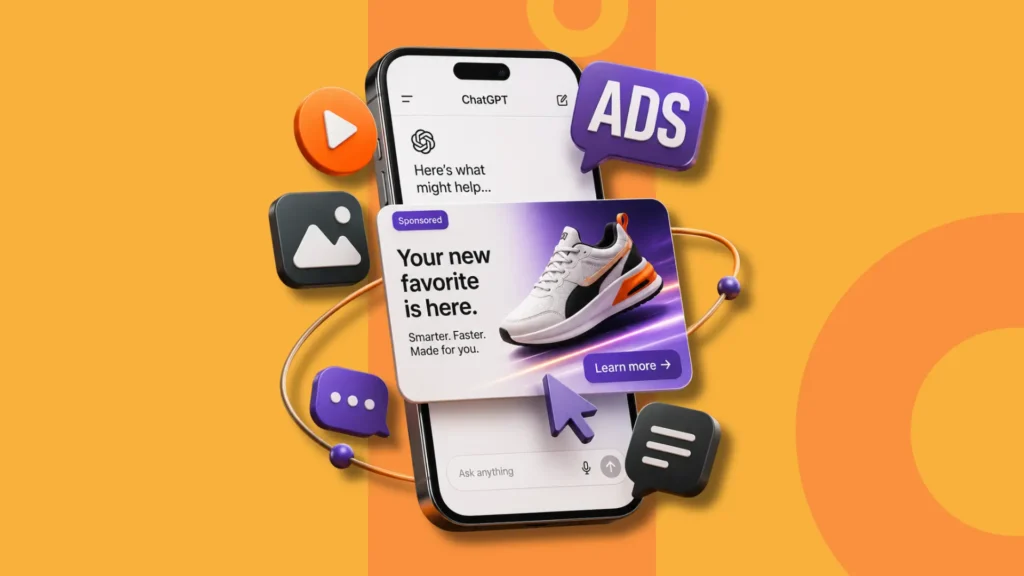
At the moment, ChatGPT uses a relatively simple ad format. It includes a headline, a short description, an image, and a link. These ads appear at the bottom of a chatbot response. Recent design mockups reviewed by Digiday showed a slightly updated version. In that version, the image appears larger, and advertisers can add a customizable call-to-action button. The ad unit has also become slightly narrower, shrinking from 480 pixels to 440 pixels wide. While that sounds like a small change, the goal is to make sure ads do not take attention away from the actual chatbot response.
What is OpenAI actually hiring for?
OpenAI has published three new roles within its monetization team.
The first is a senior engineering position that requires at least seven years of experience. OpenAI describes it as a “foundational role.” This person would help build the entire advertising system, including the infrastructure, APIs, and the technology that controls how ads are structured, delivered, and displayed across different devices and media types.
The other two roles belong to a dedicated “Ad Formats” team. One role focuses on iOS and the other on Android. Both require at least four years of experience and are focused on how ads are displayed inside OpenAI’s mobile apps.
Together, these roles suggest OpenAI is investing heavily in expanding its advertising capabilities.
Which specific ad formats are named in the listings?
The job postings directly mention six ad formats: text, image, video, native, conversational, and interactive. This is significant because it is the first time OpenAI has publicly identified these formats in its own hiring materials. Previously, the company had only spoken more generally about advertising evolving over time.
What do text, image, video, native, conversational, and interactive ad formats actually mean?
- Text ads: Written copy only, typically a headline, short description, and link.
- Image ads: Static visuals paired with text, designed to boost attention and brand awareness.
- Video ads: Moving visual content that often drives higher engagement but requires more screen space.
- Native ads: Ads designed to blend into the platform experience and resemble surrounding content.
- Conversational ads: Interactive ad experiences where users can ask questions and receive responses before taking action.
- Interactive ads: A broader category that includes quizzes, forms, configurators, and other ad experiences that encourage participation rather than simple clicks.
One distinction worth noting is text, image, video, and native describe what the ad looks like, while conversational and interactive describe how users engage with it. OpenAI listing both categories separately suggests future ad formats could combine different creative formats with different interaction models.
Why does privacy language appear directly in engineering job descriptions?
All three job listings require engineers to support safety, privacy, fairness, and policy compliance across advertising systems. The mobile-focused roles go even further by mentioning policy-aware UX patterns and format validation as key responsibilities. This indicates that OpenAI is trying to build trust and compliance directly into the technology from day one. Many advertising platforms have historically added safety features after encountering problems. OpenAI appears to be taking a different approach by making these requirements part of the product development process from the start.
Why has OpenAI moved slowly on ad format variety until now?
TAU Marketing Solutions CEO Rob Webster points to the underlying complexity these roles have to solve: attribution, brand safety, and device modeling in an environment where no established playbook exists for running ads inside an AI assistant. eMarketer principal analyst Nate Elliott has been more direct, noting that OpenAI has so far scaled a single global format and placement without testing whether it performs best for advertisers or users, and arguing that different ad types will likely perform differently across audiences, advertiser goals, and conversation types.
What has OpenAI’s own leadership said about what’s next?
OpenAI VP of monetization Benji Shomair said in May that “creative variation has been a real key to success,” signaling more formats were already planned before the job listings surfaced. Ads lead David Dugan has said the roadmap is being shaped directly by feedback from test advertisers, meaning the sequence and timing of new formats remain unannounced.
What does this mean for organic visibility inside ChatGPT?
As new ad formats arrive, they may take up more space on the screen. Larger image ads and potential video formats could become much more visually prominent than today’s relatively small ad unit.
For brands that depend on organic visibility within ChatGPT responses, this creates an important consideration. Even if OpenAI continues to separate advertising from the content of its answers, paid placements and organic mentions will still compete for user attention within the same interface.
In other words, the content of ChatGPT’s answers may not change, but the amount of attention available for unpaid visibility could.
FAQs
Does ChatGPT run video ads today?
No. As of now, ChatGPT’s only live ad format is a text-and-image unit with a link; video, native, and conversational formats are in development, not yet live.
Is ChatGPT advertising sold on CPM or CPC?
OpenAI has extended its existing ad format from CPM (cost-per-impression) to CPC (cost-per-click) bidding through a self-service ads manager.
In how many countries can advertisers currently target ChatGPT users?
The tested ad format is live in seven markets as of the latest reporting.
Will more ad formats reduce organic brand mentions in ChatGPT answers?
Not directly, but larger ad units competing for the same screen space raise the practical stakes for brands relying on unpaid mentions in ChatGPT responses.
Final Takeaway
OpenAI’s advertising business appears to be entering a new phase.
The company is no longer focused solely on a single text-and-image ad unit. Its recent hiring activity points toward investment in image, video, native, conversational, and interactive advertising experiences. No official launch dates have been announced. However, the hiring strategy, engineering focus, and privacy-by-design requirements all point in the same direction. OpenAI seems to be building the foundation for a full multi-format ad stack rather than making small improvements to its current ad product.
The presence of every major ad format suggests OpenAI isn’t experimenting with advertising but is focused on laying the groundwork for a mature advertising ecosystem. Search became Google’s business once it could support diverse advertiser objectives. OpenAI appears to be heading down a similar path.
As AI ad systems get better and better, is search really dead? Brands still wanna rank, so they’re now competing for AI mentions, citations, recommendations, AI sponsored responses, AI conversational placements.
For media buyers, marketers, and adtech teams, this is an important development to watch. The decisions being made today could shape how advertising works inside AI assistants long before these new formats become available to the public.